




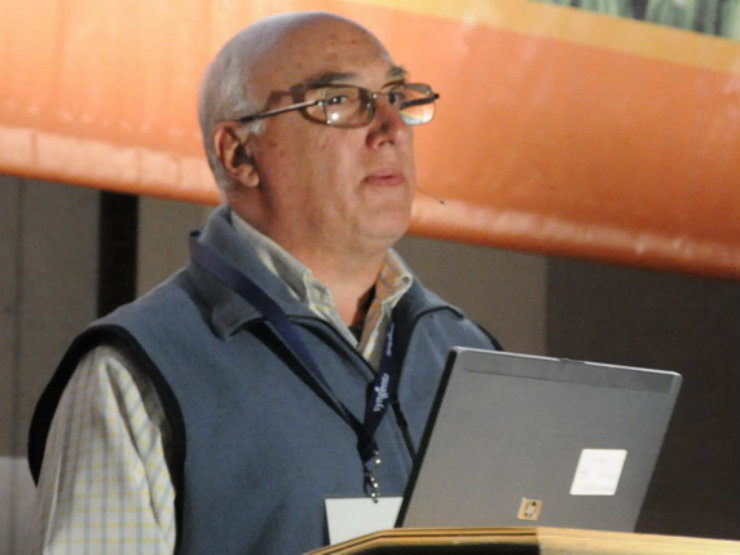
The prestigious specialist in agricultural climatology analyzes how climate has changed in the past few years and asserts that, in general terms, the blueberry season will end satisfactorily.
Engineer Eduardo Sierra, specialist in agricultural climatology indicated that “In full harvest, we see a relatively quiet outlook if compared with last year with a record El Niño event. Today we have a very weak La Niña in the Pacific, and its influence would not strongly reach Argentina and Uruguay, but we do have a disturbing influence of the Atlantic Ocean, with quite a big struggle between the Falkland current, which is cold and extends throughout the South American coasts from the Pole and it is at the height of the border of Rio Grande do Sul and Santa Catarina, with the warm current from Brazil, which is the one marking the present conditions with much atmospheric humidity and fresh winds”.
“The encounter of both currents results in a cyclonic turn of winds and enters South America with southern, southeastern and eastern winds, which do not allow temperatures to rise. As soon as there is a temperature increase, it only lasts one or one and a half days. When temperatures increase in the continent, the pressure drops, then the Atlantic receives an injection of cool and humid sea air, which has been the cause on account of which the fruit experienced delays in coloring. Even if the campaign had many hours of cold, heat and radiation were needed. The conditions of harvest in the area of Entre Ríos, Corrientes and the Republic of Uruguay remain with climatic events which do not hinder it too much, with little likelihood of storms, winds or excess heat due to the maritime influences of the Atlantic Ocean”, he points out.
Tucumán is a different question as it is nearer the Pacific Ocean, and there La Niña produces storms though the perspective of weather worsening would occur once the harvest is completed. In general terms, Sierra estimates that the season would end from good to very good for Argentina and Uruguay.
Climatic Change
On analyzing the causes of climatic change, Engineer Sierra states that in 2006/2007, there was really a milestone period, which ended with 30 very good years in the global climate. From that point, freezes and hails have occurred. Freezes that had not occurred in the north of Argentina and Paraguay since 1975. In 2013, the freezes returned. “There were 40 good years and now we say that the change is the cause of global warming. South America has a climatic cycle where we pass from an excellent cycle to this regular one, global warming introduces storms to the climate. We go from a paradise to a climate that is normal even if we do not like it”.
Argentina and Uruguay present a higher vulnerability as they have days with limiting and riskier weather conditions. But when we do well, we can obtain a fruit with better flavor. With less aesthetics but with exquisite taste. We present a fruit which is not quite equal as it has a subtropical climate with the effect of the cold current of the Pole that is characterized as moderate and stable. It is an austere climate. It is here that Argentina and Uruguay present bigger advantages.