




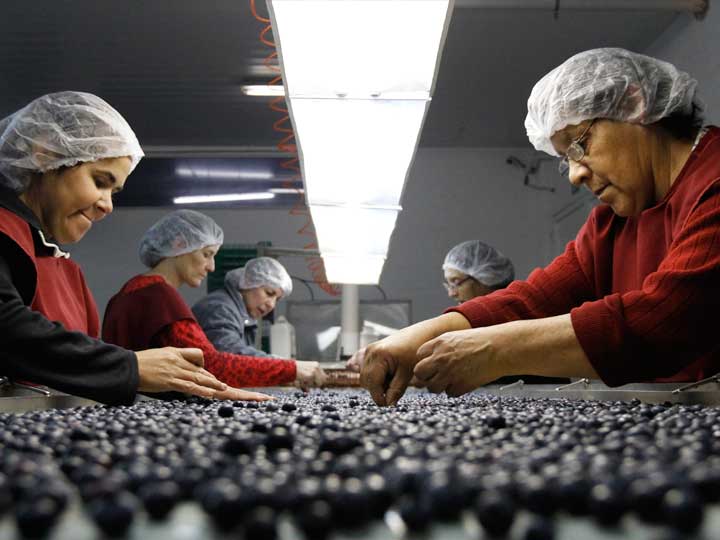
Following the article previously published by Fresh Plaza has asked the Argentinean Blueberry Committee (ABC) to comment on the alleged child labor in Argentine blueberry harvest fields.
“After being alerted by the publication of a law that mentions that Argentinean blueberries are the product of slave labor, we started working hard on this issue with the collaboration of the various areas of government in Argentina. Additionally, we have the support of the American Embassy to continuously exchange information to certify that there are no cases of child labor registered in our country in 2016. Fortunately, trade between the United States and Argentina never closed, there was no actual harm done,” said Carlos Stabile, representative of ABC.
Earlier this year, President Obama rectified the Tariff Act of 1930, a law that prohibits imports produced by forced labor but that continued to allow small quantity imports of these products. The rectified law was signed in late February and entered into force in mid-March, officially banning all imports of products made by slave labor. The law listed more than 350 products made under these conditions, including Argentine blueberries because of child labor.
“It’s worth stressing that there was never a complaint of forced labor or slavery against the producers of blueberries in Argentina. The reports that this law refers to were made by the RENATEA organization, which stated there was child labor in blueberry production. However, that was never proven,” Stabile said. “This whole misunderstanding began in 2012, when RENATEA (National Register of Agricultural Workers) filed a complaint of child labor in blueberry fields to harm us. This organism had a very complicated relationship of enmity with the agricultural sector and the trade unions. Fortunately, with the change of government, this entity no longer exists,” he added.
“Argentina has over 2,800 hectares dedicated to blueberry crops, 70% of which are in the hands of large producers, which have social certifications. Thus, it’s impossible for there to be child labor in 70% of the country’s blueberry farms. The remaining 30% of the farms are in the process of making the necessary reports to establish that they are complying with all laws,” Stabile said.
“Obama ended his visit to Argentina on March 25, and his agenda included issues of high relevance with the new government, such as trade liberalization between the two countries. This visit may favor us significantly and boost relations between the US and Argentina, including the solution of this misunderstanding. Argentina is a strategic partner for the United States and the current government has a great interest in improving trade relations,” concluded the spokesman of the Argentinean Blueberry Committee.